WORDPRESS DXP SERVICES Your best-of-breed tools, on an open-source DXP foundation
Every other DXP is someone else’s platform. One that locks you in, or charges seven figures for tools you use 40% of. WordPress is the only composable DXP you own. Connect the tools you need — nobody tells you what to swap, upgrade, or migrate to next.
Book free 20 hours of discovery
WORDPRESS DXP SERVICES
Your best-of-breed tools, on an open-source DXP foundation
Every other DXP is someone else’s platform. One that locks you in, or charges seven figures for tools you use 40% of. WordPress is the only composable DXP you own. Connect the tools you need — nobody tells you what to swap, upgrade, or migrate to next.
Book free 20 hours of discovery
Trusted by the world’s leading brands








Why open-source Composable is good. Vendor-locked isn’t

Monolithic DXPs made leaving feel riskier than staying
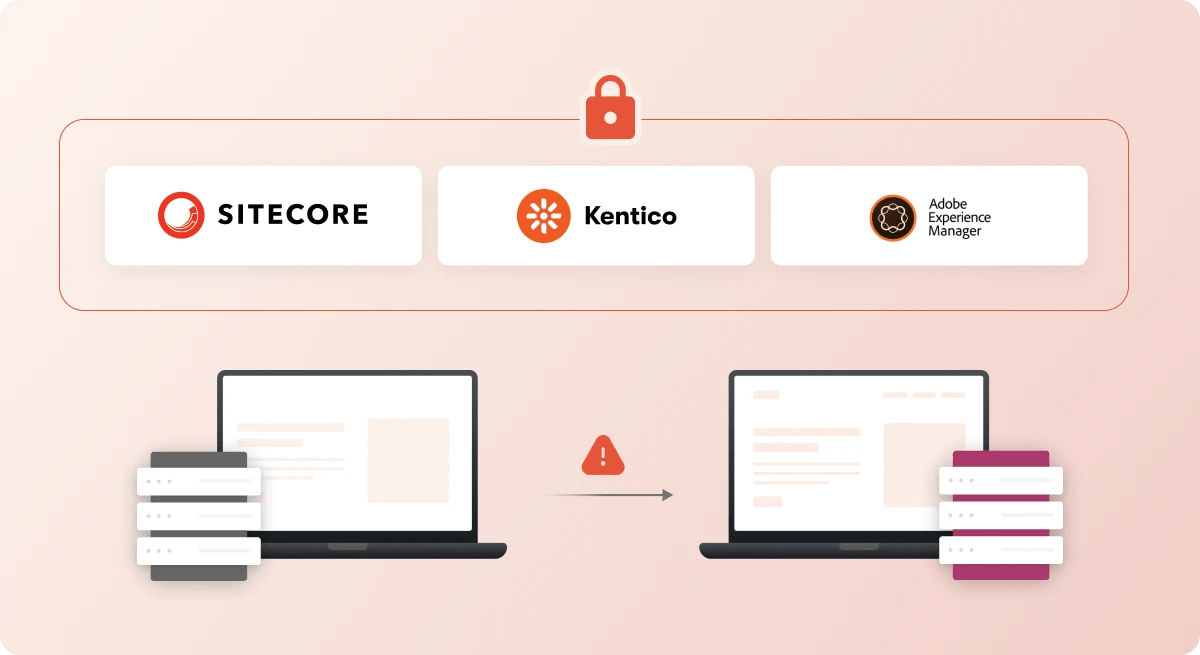
AEM, Sitecore, Kentico… Most enterprises use 40% of what these DXPs license. But leaving means risking SEO, downtime, and a migration project nobody wants to own. You stay, and the bill keeps growing.
So the market moved to composable
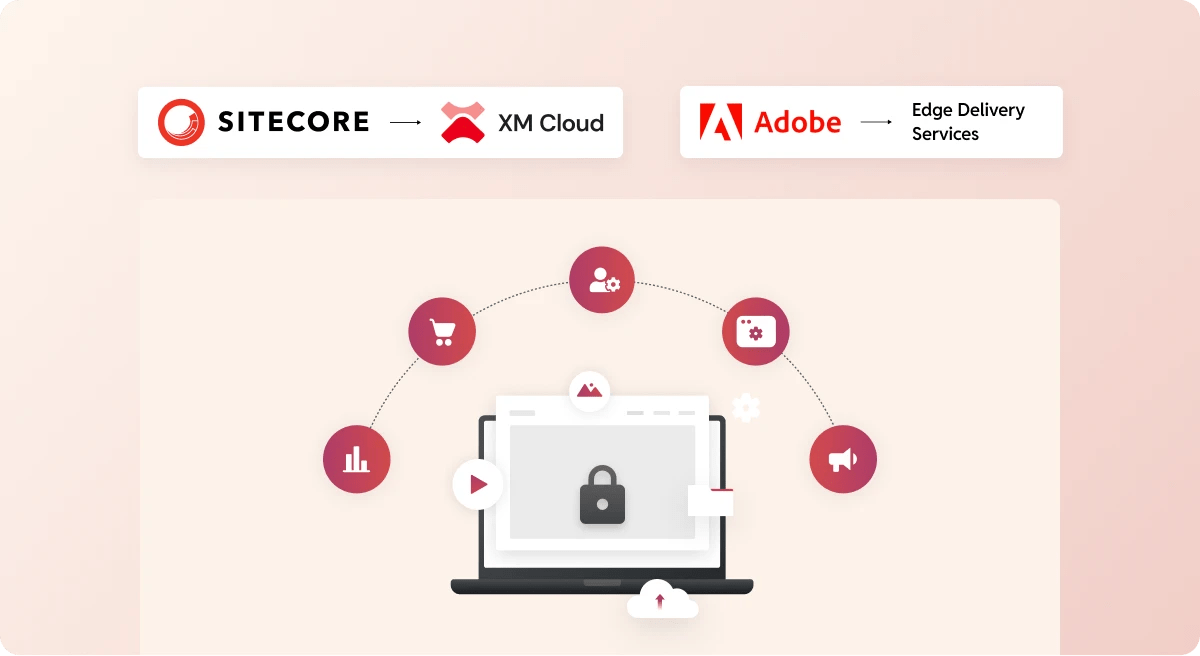
Sitecore became XM Cloud. Adobe added Edge Delivery Services. Everyone said “we’re composable now”. But if they sunset a feature? Raise pricing? You have no exit. It’s the same lock-in under a new name.
Composable DXP is still vendor lock-in…
Then there are the pure-play composable vendors — Contentstack, every headless SaaS CMS. But you’re still paying a SaaS subscription, still on their infrastructure, and still subject to their pricing changes.
…Except one
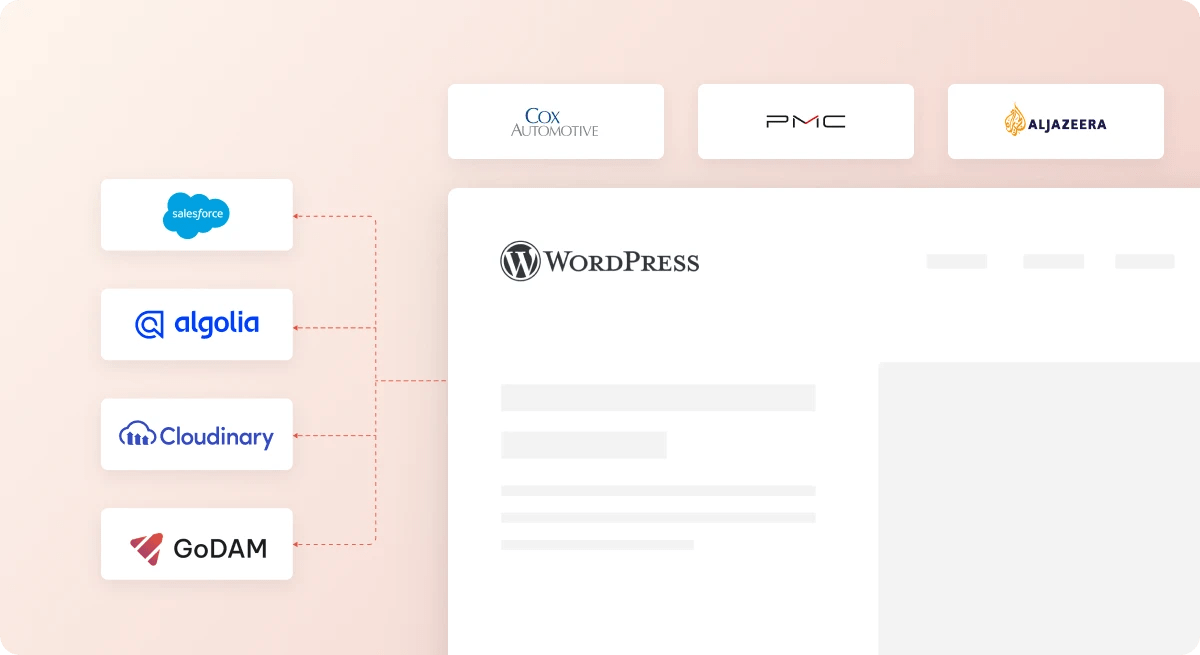
WordPress has been powering enterprise digital infrastructure for giants like Al Jazeera, Penske Media, and Cox Automotive.
It’s open source, API-first, and built to connect your best-of-breed tools. Use it as your content core and plug in whatever you need: Salesforce, Algolia, Cloudinary, DAM – even your custom software
Why WordPress? WordPress: A foundation for an open DXP, yours to own and control
WordPress gives you the open-source core. You choose what connects to it.

Own the foundation
WordPress is open-source. The core of your DXP isn’t licensed from anyone. Every tool you connect to it is replaceable. The WordPress core stays put.

Swap tools, keep the core
Connect Salesforce, your DAM, whatever is best for your use case. Something better comes along? A vendor raises prices? You replace that layer.

Cut licensing, invest in building
Your DXP budget belongs in building what your business needs, not licensing features your team works around anyway.
Recent case study Cox Automotive: 8 brands on WordPress DXP with best-of-breed integrations built in
AEM + Kentico
**(Before)**WordPress Open DXP
(After)8 separate maintenance cycles One Content Hub with all resources published from a single dashboard across every brandNo centralized analytics deploymentCox Blocks Library with shared blocks and patterns across all 8 sitesNo shared DAMGTM deployed centrally for analytics Assets duplicated, uncontrolled, and siloed across brandsBynder DAM integrated for shared asset management across all Cox brand sitesVideo platform (VidYard) lacked form-layer capability needed for lead captureGoDAM for video to replace VidYard with native form-as-video-layer capability for lead captureLanding pages required developer tickets for layout changes Landing page creation time cut drasticallyBrand commonality at 2% across sites Brand commonality: 2% → 50%
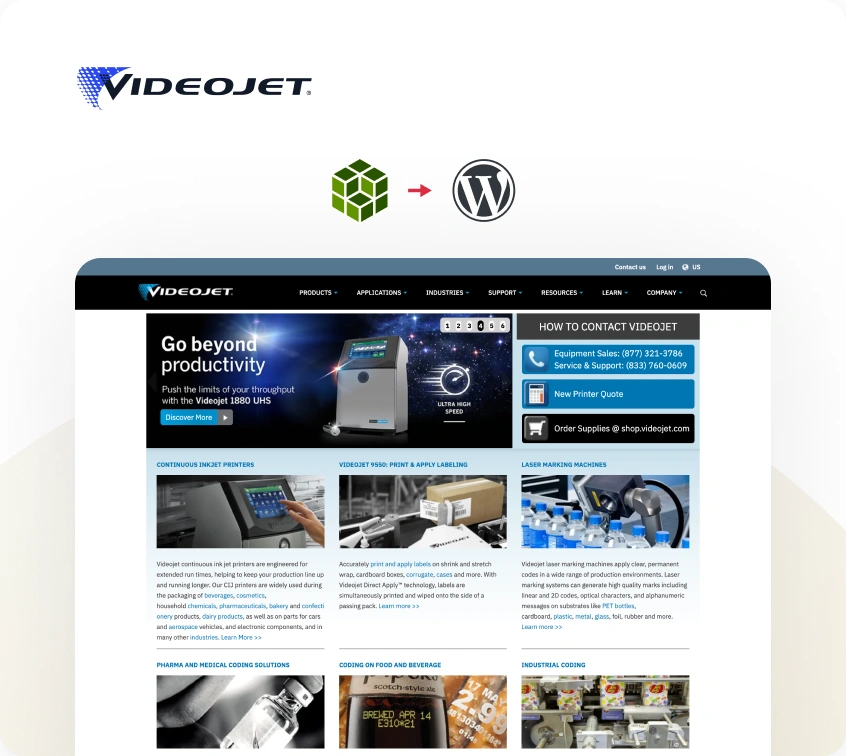
Videojet: Freed from Adobe CQ5 licensing, 28 sites migrated
Before:
- Locked into Adobe CQ5 at end-of-life.
After:
- 28 sites live on WordPress VIP. Marketing never went offline
- Hundreds of gigabytes of assets managed from one shared DAM, built into WordPress
- All SEO rankings preserved across 12,000 pages in 22 languages
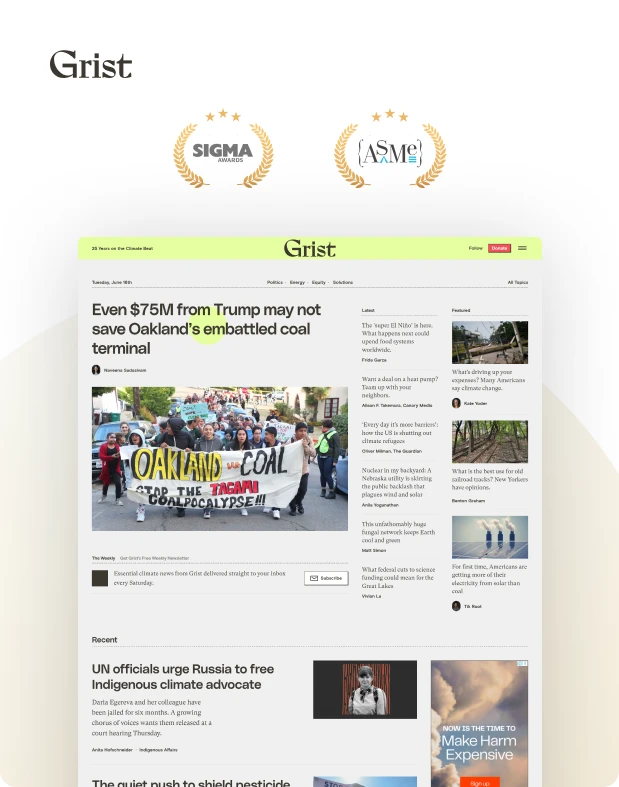
Grist: WordPress platform upgraded and extended
Before:
- WordPress already in place, but the platform needed modernization and expansion.
After:
- CMS: WordPress (upgraded)
- CRM: Salesforce
- Marketing automation: Pardot + FeedOtter
- Analytics: GA4 + Chartbeat
- Donations: News Revenue Hub
- Content distribution: Apple News (WordPress content auto-syndicated on publish)
- Asset management: WordPress Media Library
Compare DXPsSee how your DXP options stack up
Monolithic DXPs lock you into a vendor. Composable SaaS makes the lock-in less obvious (but it’s still there). WordPress is the only foundation in this comparison that’s genuinely yours.
What you needMonolithic DXPComposable SaaS DXPWordPress (Open DXP)Who owns the coreVendor-owned. Their roadmap and release cycleTheir infrastructure. You just connect to it.Open source. Nobody else’s name is on it.Licensing cost$250K–$750K/yr; $1M at enterprise scale. Bundled features you don’t use.Per-seat or usage-based. Scales with your growth.No CMS license. Pay for hosting and engineering.FlexibilityEverything is bundled. You’re using what they built.Swap tools freely, but the CMS core stays on their infrastructure.Swap any layer. The WordPress core stays put.Upgrade pathVendor-controlled. Sitecore XM Cloud migration alone costs more than the old license did.Vendor-controlled. When they end support, you move — on their schedule.You upgrade when it makes sense for you, and not when a vendor forces it.


What sets rtCamp apart is their deep expertise in WordPress/WooCommerce and their Gold Partner status with WordPress VIP. Whether you need complex e-commerce or publishing solutions, their team delivers with precision, honesty, and skill. If you’re a business owner or part of senior management looking for a reliable and dedicated web agency for your company. Thank you, rtCamp, for giving us the website our business deserved!
Puru Saxena
Founder & CEO, AlphaTarget
Benefits for all What your marketing team gets, finally
Marketing team
Engineering team
Finance team

Publish pages, campaigns, and updates without developer tickets

Brand consistency across every site without manual checks

One editorial workflow across every brand, channel, and region

Governed, documented infrastructure with reusable components
No proprietary systems and vendor-locked pipelines

A codebase that holds up when the company acquires a brand or replaces a tool
No per-seat licensing. No rebuild costs every time a vendor drops a new version

A predictable cost model: pay for engineering, not for the privilege of using your own platform

A 5-year TCO that doesn’t compound the way AEM or Sitecore’s does
You own it. We engineer it
WordPress is the open source foundation of your DXP. What rtCamp builds on top of it is yours: the architecture, the integrations, the codebase. Our approach draws from 500+ enterprise projects. The first 20 hours of discovery are free — that’s where you see how we work.
Why enterprises trust us

Direct access to VIP enterprise hosting, security monitoring, and 24/7 support tier
500+
AEM, Sitecore, Kentico, Drupal, and custom platforms

Audited security practices across our full engineering workflow
Cox Automotive. PMC. News UK
AEM, Sitecore, Kentico, Drupal, and custom platforms
How it worksHow we build composable DXPs on WordPress
Every phase, owned by us. Every decision, made by you.
DXP audit
DXP audit and strategy
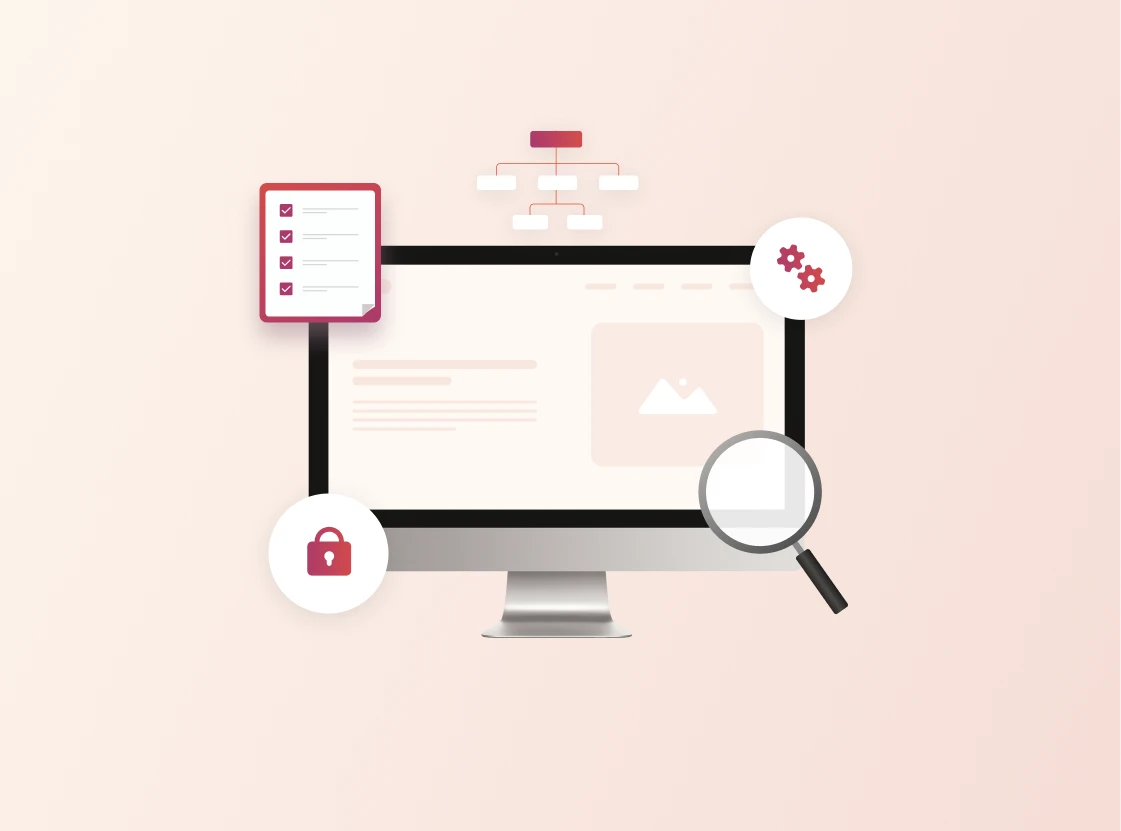
We map your current stack — CMS, integrations, content architecture — and identify where vendor lock-in is costing you. You leave with a DXP roadmap: what stays, what goes, and what gets built on WordPress
WordPress architecture
WordPress architecture design
We design the WordPress foundation: content model, integration layer, governance framework, and hosting infrastructure. An architecture your engineers understand, own, and can maintain without us.

Pilot build
Pilot build
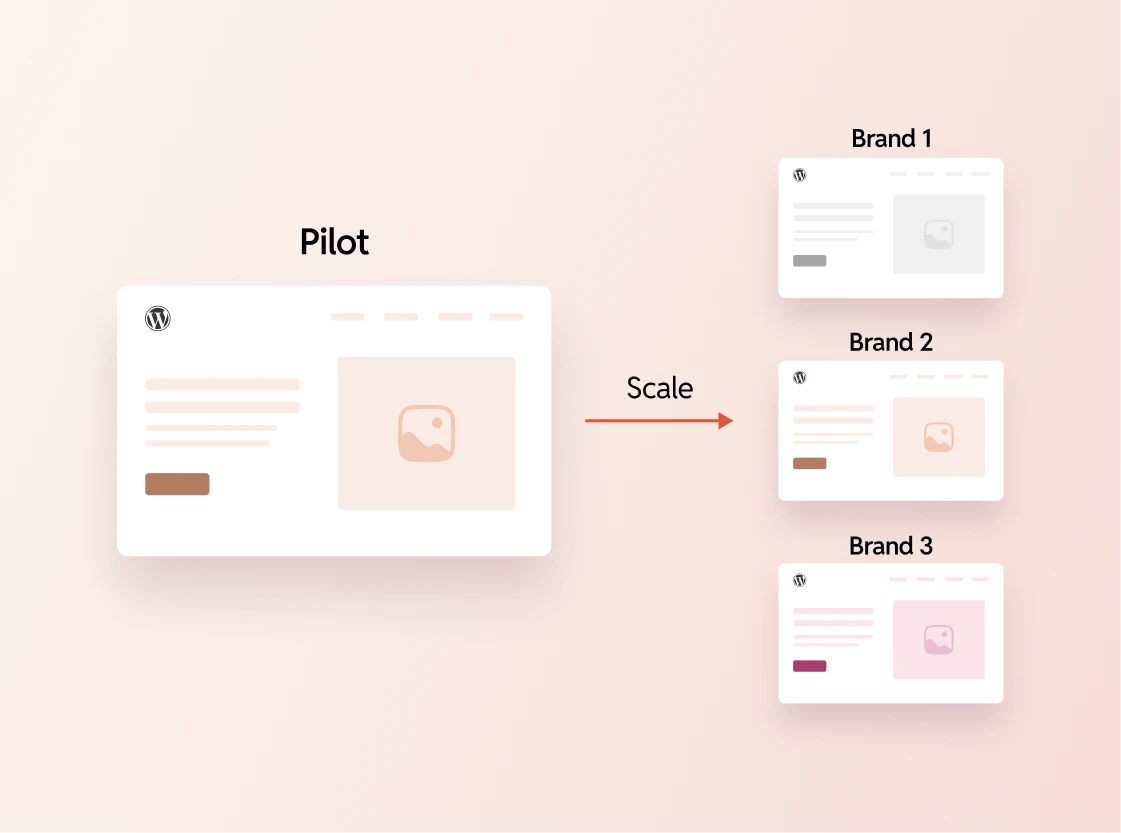
We build one brand or one use case first. You see it working before you commit the rest of the budget. You know it works before you scale it.
Phased build
Phased build and integration
We connect your stack — CRM, DAM, analytics, personalization — one layer at a time. Your live site stays live throughout. A composable DXP your team can operate.

Enablement
Enablement
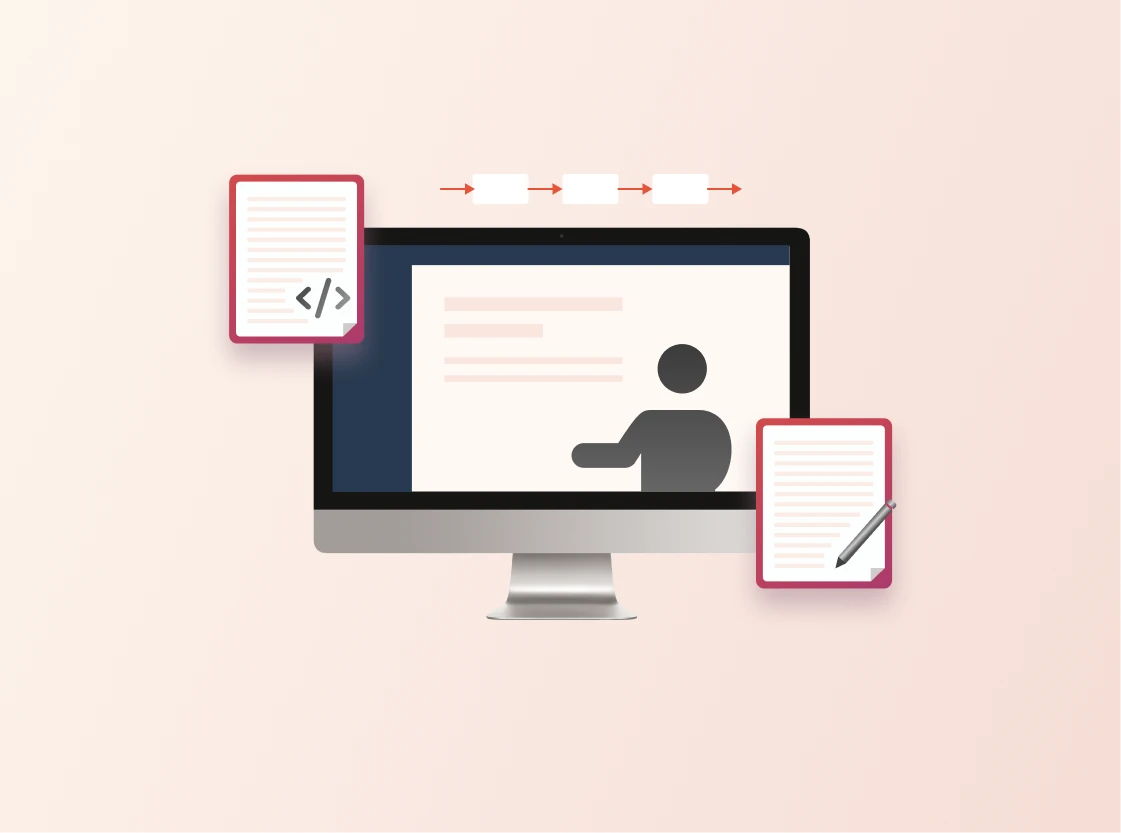
We hand off the platform to your marketing and engineering teams — with documentation, editorial workflows, and enough training that they don’t need us for day-to-day work. Your teams publish and build independently from day one.
Hypercare
Hypercare and evolution
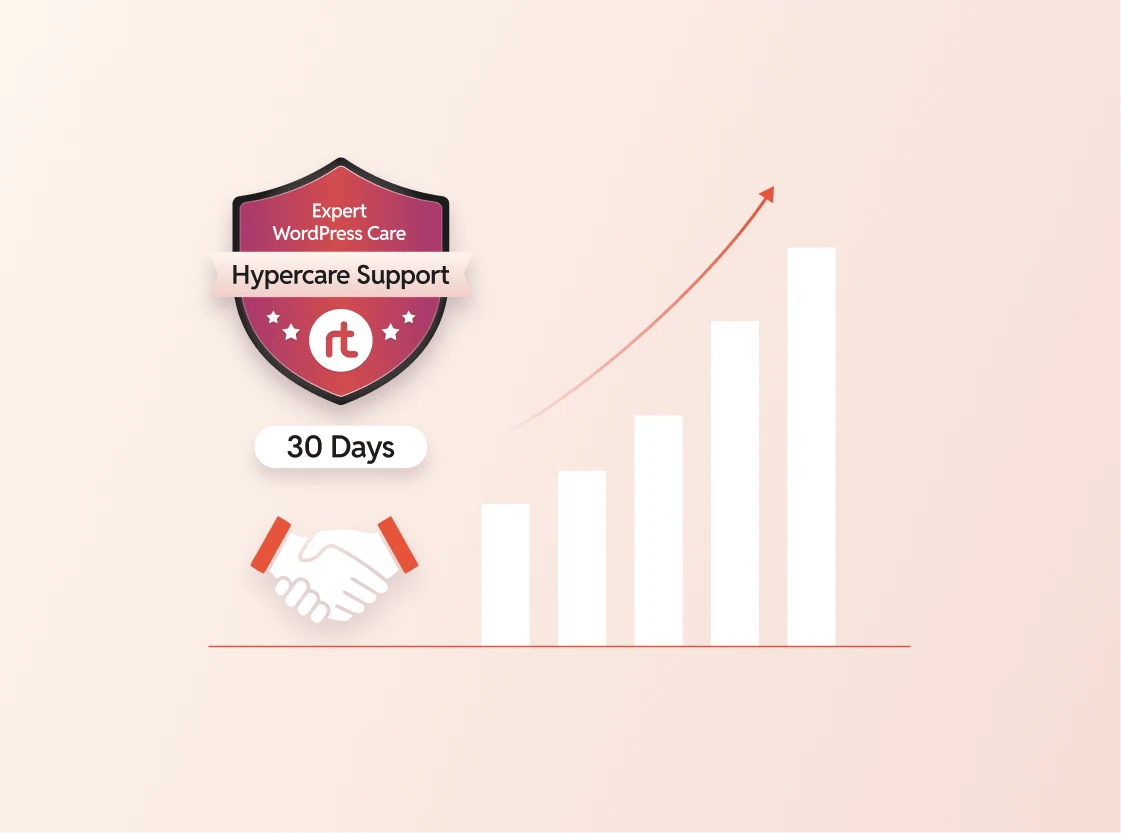
30 days of dedicated support post-launch. After that, we can stay involved as your platform grows, adding integrations, new brands, and new capabilities. DXP built to last, and not to be replatformed in 3 years.
Book free 20 hours of discovery
- DXP audit
- WordPress architecture
- Pilot build
- Phased build
- Enablement
- Hypercare
AI readiness Own your AI stack the same way you own everything else
Other DXPs are bundling AI the same way they bundled everything else — on their terms. On WordPress, your AI stack is composable and owned as the rest of your platform.

AEO implementation
We make it easy for you to make your content findable by AI tools like ChatGPT, Claude, Perplexity, etc.

AI-led editorial
Editorial automation you choose and control, not bundled into a license you’re overpaying for.

AI-led personalization
Personalization as a composable layer. Plug in what works, replace it when something better comes along.

WordPress as AI-integrated platform
AI connects through the same open APIs as every other tool in your stack. No proprietary integration layer between you and your data.

AI-accelerated development
The composable platform gets built faster. AI in the delivery means your DXP is live sooner.
Learn more about rtCamp’s approach to AI on WordPress
Start with a 20-hour free discovery
We’ll assess your setup and recommend the right path, be it WordPress or something else.
Let’s address your doubtsConcerns we hear come up
We’ve heard these in almost every scoping call. Here’s what we tell people.

“WordPress isn’t an enterprise DXP.”
Al Jazeera runs its global editorial platform on WordPress VIP. Penske Media serves hundreds of millions of pageviews monthly. When properly architected, WordPress handles enterprise scale well.
“Open source means security risk.”
The White House and NASA run on WordPress VIP. It holds FedRAMP Moderate authorization, SOC 2 Type II, and ISO 27001 certification. rtCamp is SOC 2 compliant and builds to VIP standards on every engagement.
“We’ll lose SEO in migration.”
We map every URL before migration begins, validate redirect chains, and run a crawl simulation before DNS switch. VinSolutions moved off Kentico, a full enterprise DXP with years of built-up search rankings, and kept every single one.
“Our team won’t be able to maintain it.”
Documentation, training, and 30-day hypercare are our standard deliverables. For Private Media, we built a Documentation Kit into their platform: an internal reference site cataloguing every block, component, and style guideline.
“WordPress doesn’t have a DAM, CDP, or analytics built in.”
That’s the point. WordPress connects to whichever DAM, CDP, A/B testing tool, or analytics platform you already use (or the best one available). Cox Automotive runs Bynder for DAM, GoDAM for video, and GTM for analytics — all integrated, all replaceable.
Related services Not sure where to start?
Most enterprises we talk to know something needs to change, they’re just not sure whether they need a migration, a platform consolidation, or a full DXP build.

Enterprise CMS migration
Still on AEM, Sitecore, Kentico, or Drupal? If the platform is the bottleneck, we’ve done migrations 300+ times. Zero marketing downtime is the standard.

Define the right strategy
The first 20 hours are free. We’ll map your current stack, identify where the cost and friction is coming from, and tell you which path makes sense.

Enterprise platform unification
Running more than one brand site? When the problem is fragmentation, the answer is a governed multisite platform. One codebase. Each brand keeps its identity.
Get free 20 hours of discovery
Check outour resources

handbook
WordPress as a DXP
Handbook
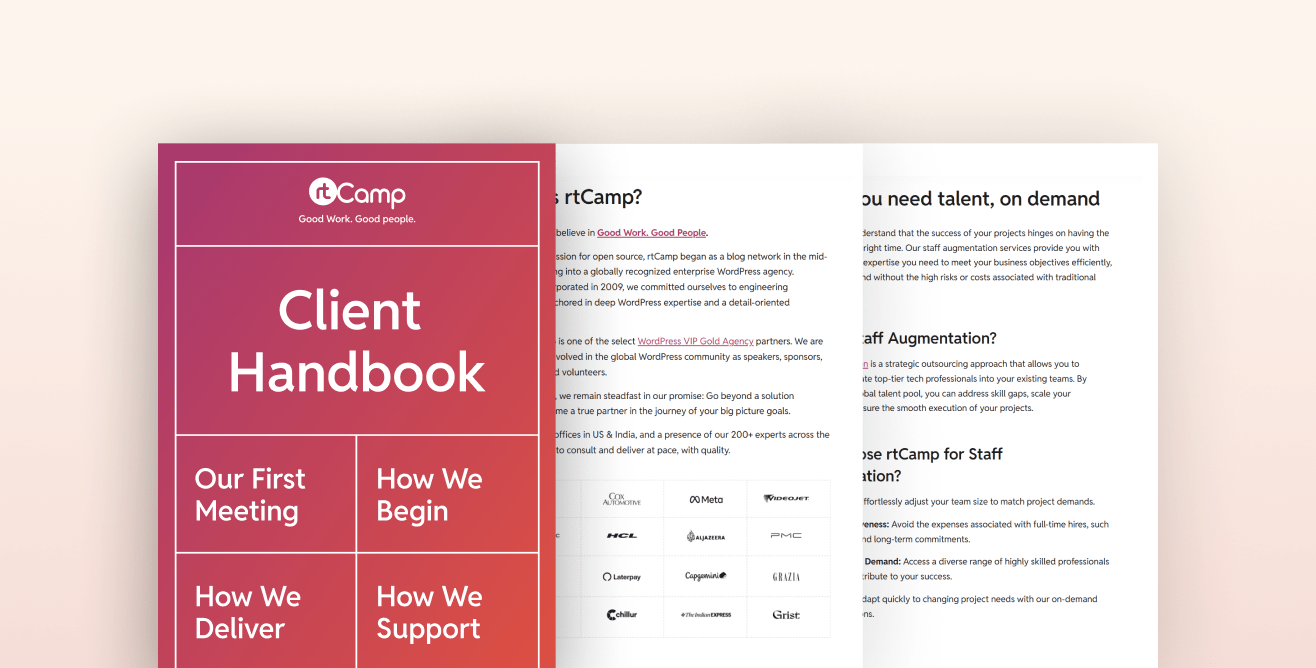
Client handbook

Article
Why WordPress is a proven platform for enterprise digital ecosystems
Frequently asked questions
Talk to an WordPress DXP expert
1. What’s an open DXP?
A traditional DXP bundles everything — CMS, personalization, analytics, commerce — into one platform, one vendor, one price tag. You use 40% of it and pay for 100%.
An open DXP puts WordPress at the center as the content core: open source, no license fee and vendor roadmap. Around it, you connect the tools you actually need. Each one is replaceable when something better comes along. The “open” part is about who controls the foundation. With WordPress, that’s you.
2. Is WordPress actually a DXP, or are you just calling it that?
Depends on how you build it. Out of the box, WordPress is a CMS. Architected properly — with a content model, integration layer, and governance framework — it becomes the core of a composable DXP. Al Jazeera, Penske Media, and Cox Automotive didn’t “install” WordPress, but built on it.
3. What’s the difference between open DXP and composable DXP? Aren’t they the same thing?
Not quite. Composable means modular: you pick best-of-breed tools and connect them via APIs. Most composable DXPs do that. Open means the foundation itself is yours: there’s no license, no vendor roadmap, and no renewal negotiation. Contentful and Contentstack are composable. They’re not open. WordPress is both.
4. Do we need to go headless to build a composable DXP on WordPress?
Most enterprises don’t. Headless adds flexibility for multi-channel delivery but it also adds complexity, slows down marketing teams, and removes the editorial experience your content team actually uses.
The composable part — connecting your CRM, DAM, analytics, personalization layer — doesn’t require headless. It requires good API architecture. We can do that with WordPress running traditionally or decoupled, depending on what your use case needs.
5. What does a typical engagement look like and what does it cost?
We start every engagement with 20 hours of free discovery. There, we map your current stack, identify where the vendor dependencies are, and figure out whether WordPress is the right foundation for your situation. If it is, we scope a pilot before anything bigger is committed.
6. What does it cost?
DXP engagements typically start from $50K for a single-brand pilot, covering discovery, architecture, and initial build. Multi-brand or complex integration work scales from there.
The first 20 hours of discovery is free, and it’s where scope and cost become clear. We don’t quote a number before we understand what we’re building.
7. Who controls WordPress, and what happens if that changes?
The core software is owned by the WordPress Foundation and licensed under the GPL — no vendor can sunset it, change the licensing terms, or force you to migrate. For hosting, there’s a range of enterprise-grade options. WordPress VIP, Kinsta, and Pagely all offer managed enterprise infrastructure with contractual SLAs. You choose the one that fits your compliance and performance requirements. And because the code is open, no single hosting decision can strand your platform. Switching hosting doesn’t mean replatforming.